
Using ESUNT with existing applications is one of the principal objectives of End-To-End Secure User Network Technology. Instead of requiring users to abandon their preferred communication platforms, ESUNT is designed to add an independent layer of over-encryption to compatible applications.
This approach is intended to allow users to benefit from ESUNT protection while continuing to communicate through familiar messaging and collaboration platforms.
How ESUNT Works with Other Applications
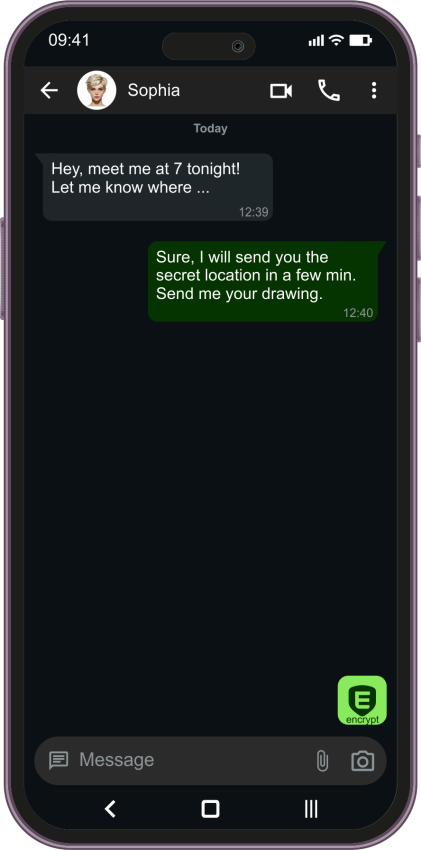
ESUNT is designed to operate as an independent security layer between the user and the underlying communication application. Content would be encrypted locally through ESUNT before being transmitted using the selected platform.
The receiving participant would use the corresponding ESUNT secure connection to recover the original content. The underlying application would carry the protected data without needing access to the ESUNT encryption keys.
Where a communication platform already provides end-to-end encryption, ESUNT is intended to add a separate, user-controlled layer of protection rather than replace the platform's existing security mechanisms.
Preparing an Application for ESUNT Protection
Before using ESUNT with another communication application, participants would need to establish the appropriate secure relationship and prepare the intended communication workflow.
- Setting up ESUNT: Install and configure the ESUNT application on the participating devices.
- Establishing a trusted connection: Create the appropriate ESUNT secure connection with the intended contact or group.
- Choosing a compatible application: Select a communication platform supported by the ESUNT integration mechanism.
- Activating ESUNT protection: Enable the appropriate ESUNT interface or protection mechanism for the communication.
- Verifying the security status: Confirm that the intended secure connection and protection state are active before transmitting sensitive content.
The exact setup procedure would depend on the supported platform, operating system, and available ESUNT integration method.
Sending Over-Encrypted Messages
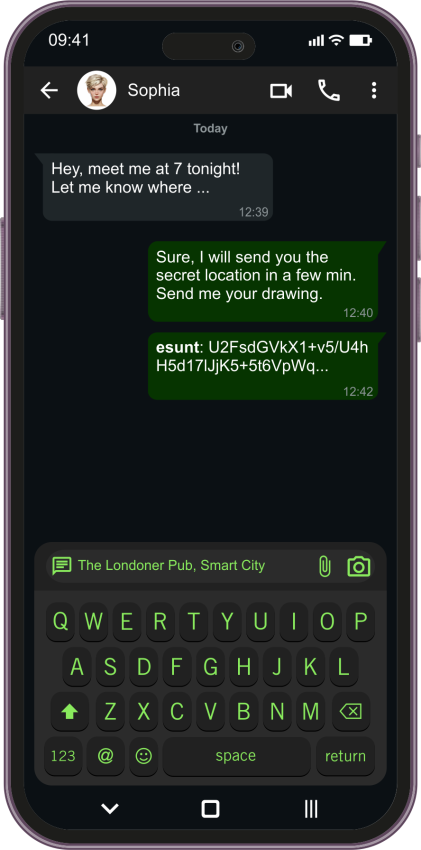
Under the proposed workflow, a user would be able to prepare protected content through the ESUNT interface and transmit it using a compatible communication application.
- Select the recipient: Choose the intended contact or established ESUNT secure connection.
- Activate the ESUNT protection interface: Open the appropriate ESUNT input or encryption mechanism.
- Compose the message: Enter the information that should receive independent encryption protection.
- Check the padlock indicator: Verify the reported protection status before sending.
- Send the protected content: Transfer the encrypted result through the selected communication application.
The underlying communication platform would transport the ESUNT-protected content. Its existing messaging, delivery, and account-management features would remain subject to the capabilities and policies of that platform.
Receiving and Reading Protected Messages
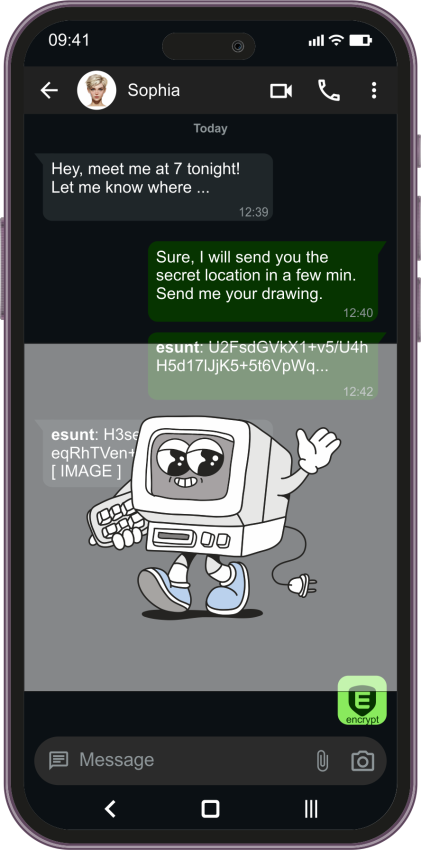
When an ESUNT-protected message arrives through a compatible application, the recipient would use the ESUNT interface and the corresponding secure connection to recover the original information.
Decryption is intended to take place within the independent ESUNT security environment rather than through the encryption mechanisms controlled by the underlying service provider.
Without the required ESUNT secure connection and cryptographic material, the recipient would not be able to recover the original protected content through the intended ESUNT process.
This separation is central to the proposed over-encryption architecture: the communication platform transports the content, while ESUNT independently manages its additional cryptographic protection.
Understanding the Padlock Indicator
The proposed ESUNT interface includes a padlock indicator intended to help users recognize when ESUNT protection is active.
Before sending or opening protected content, users should verify that they have selected the correct secure connection and that the interface reports the expected protection state.
The indicator represents the protection status reported by ESUNT. It does not independently establish the identity of another participant, prove that a device is uncompromised, or guarantee the overall security of the underlying communication platform.
Using Different Communication Platforms
ESUNT is intended to support secure communication across compatible applications without requiring every participating user to rely on a single communication service.
Potential applications include personal messaging services, professional communication tools, business collaboration environments, and other platforms capable of carrying ESUNT-protected content.
The same underlying ESUNT security architecture is intended to remain independent of the selected transport platform. However, integration capabilities may vary according to operating-system restrictions, application interfaces, message formats, and other technical requirements.
Support for individual third-party applications will require implementation, compatibility testing, and evaluation. Compatibility with every existing communication platform is not guaranteed.
What ESUNT Over-Encryption Does Not Protect
Although ESUNT is designed to provide an additional layer of cryptographic protection, users should understand its intended security boundaries.
- Communication metadata: The underlying platform may still process or retain information such as account identities, message timing, delivery details, and communication relationships.
- Unprotected content: Information transmitted without active ESUNT protection remains subject to the security mechanisms of the underlying application.
- Compromised devices: Malware, unauthorized device access, or other endpoint compromises may expose information before encryption or after decryption.
- Stored copies and backups: Content copied, exported, captured, or stored outside the protected workflow may no longer benefit from the intended ESUNT safeguards.
- Application compatibility: ESUNT cannot guarantee that every third-party application will support its intended integration mechanisms.
ESUNT over-encryption is intended to strengthen the confidentiality of protected communication content. It should not be interpreted as a guarantee of complete anonymity, device security, or protection against every possible threat.
Standalone ESUNT or an Existing Application?
ESUNT is designed to support two complementary approaches to secure communication.
Using ESUNT with existing applications would allow users to retain familiar communication platforms while adding an independent, user-controlled encryption layer to compatible workflows.
Using the standalone ESUNT application would provide a dedicated communication environment incorporating ESUNT's own messaging, contact management, secure connections, and related capabilities.
Both approaches share the objective of giving participating users greater control over the cryptographic protection of their communications.
For a broader explanation of the underlying architecture, see ESUNT Technology - Architecture and Secure Communication.